
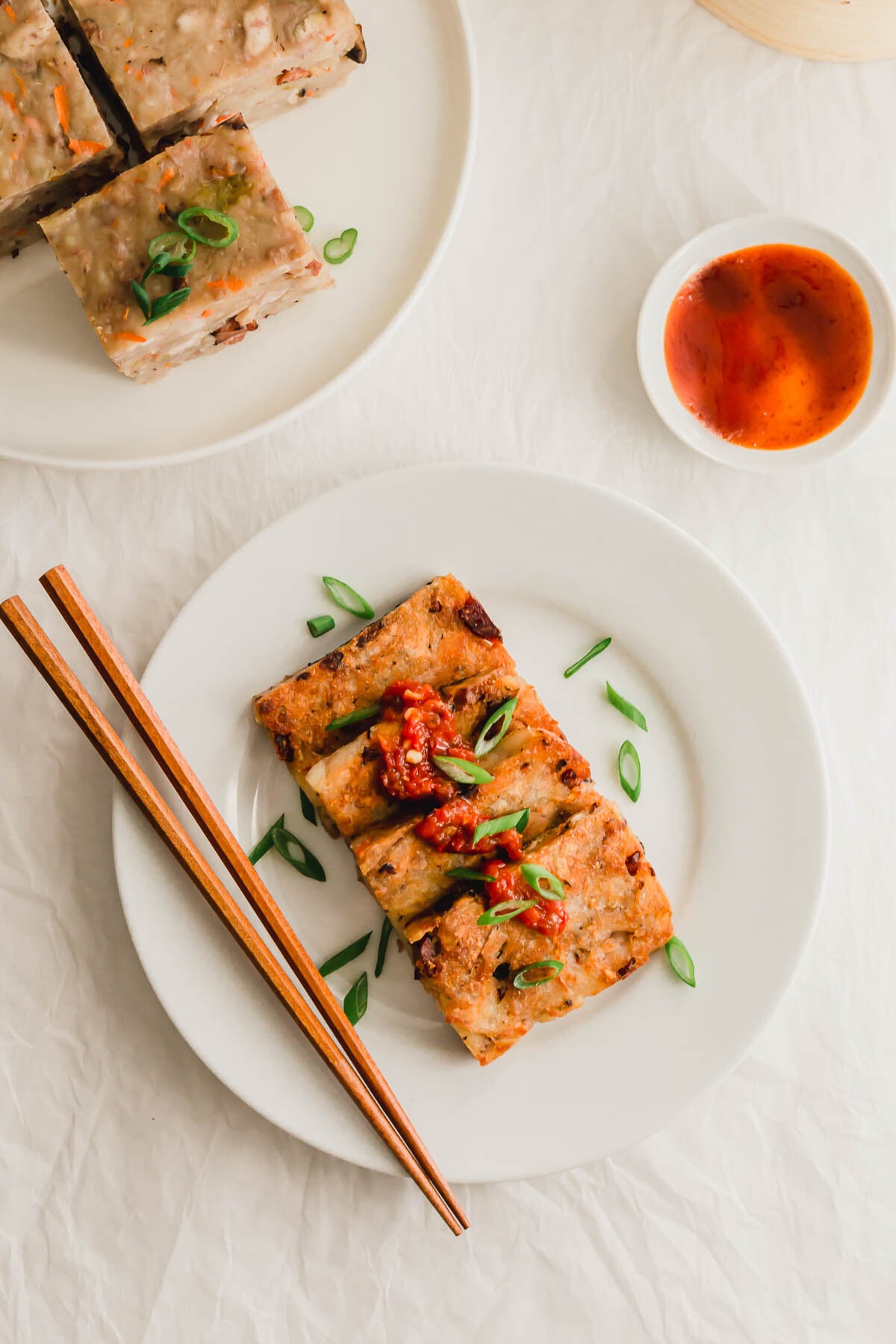
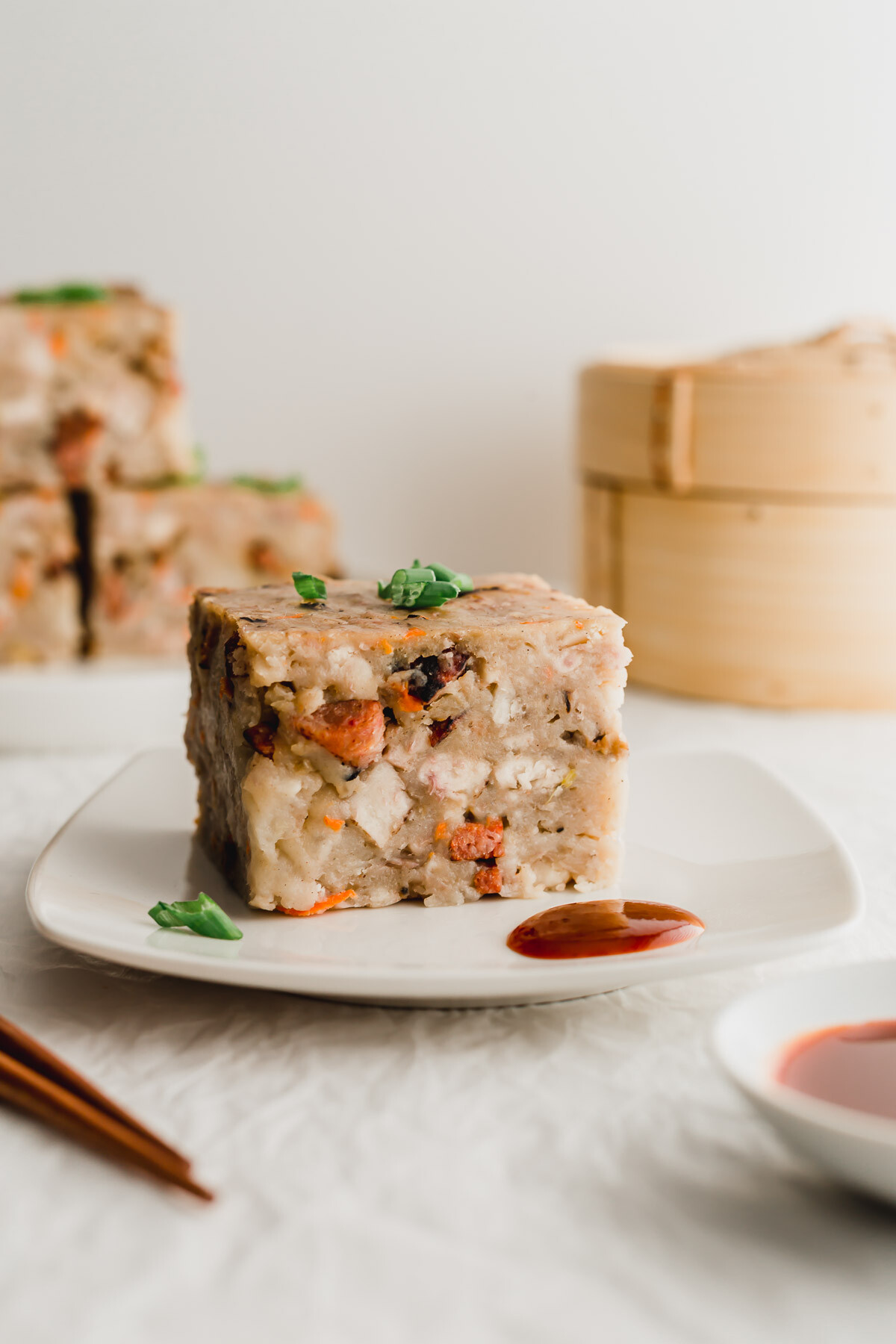
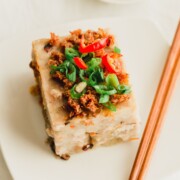
This recipe for Steamed Taro Cake (Wu Tao Gou 芋頭糕) is a classic dim sum dish, featuring taro, Chinese sausage and mushrooms mixed together to form a dense, savory cake. Enjoy it freshly steamed, or lightly pan-fried -- it's delicious either way!

Want to save this recipe?
Enter your email & I'll send it to your inbox. Plus, get great new recipes from me every week!
What is taro?
Taro is a starchy root vegetable widely utilized in various cuisines and has a light beige interior adorned with purple flecks.
Its exterior peel is tough, brown, and exhibits a rough texture.
Taro is a versatile ingredient, used in sweet and savory dishes such as taro puff dumplings (wu gok) 芋角, taro paste, taro coconut sago dessert soup. steamed taro cake, steamed taro buns, and taro ice cream.
What is steamed taro cake?
Steamed taro cake is known as wu tao goh, or yam cake (in Southeast Asia), and is made in a similar manner as lo bak go, Chinese radish or turnip cake.
It typically consists of taro, Chinese sausage, Chinese mushrooms, and rice flour to bind it into a thick paste, which is ultimately steamed into a dense cake.
Special equipment you'll need
- 8" or 9" square or round pan
- steamer/steaming rack
Ingredients you'll need
- Chinese sausage (lap cheong): diced
- Chinese bacon (lap yuk): diced, optional
- dried shrimp: washed and ground
- Chinese mushrooms: soaked, and diced into small pieces
- carrot
- taro root: peeled and shredded or chopped into tiny pieces
- Chinese five-spice powder
- rice flour: a white flour made from milling rice; it is different than glutinous rice flour and cannot be interchanged
- all-purpose flour: regular plain flour
- tapioca starch: is a white starch from cassava plant; has a fine texture and is used in making tapioca pearls for bubble tea
- sea salt
- black pepper
- hot boiling water: to cook the starches/flours
- miso paste: adds a savory flavor; you can use soy sauce if you like
Garnish:
- green onion: chopped

How to make Chinese taro cake
Lightly grease a piece of parchment paper and place it into a 8" or 9" heat-proof pan (square or round).
Pan-fry meat and vegetables:
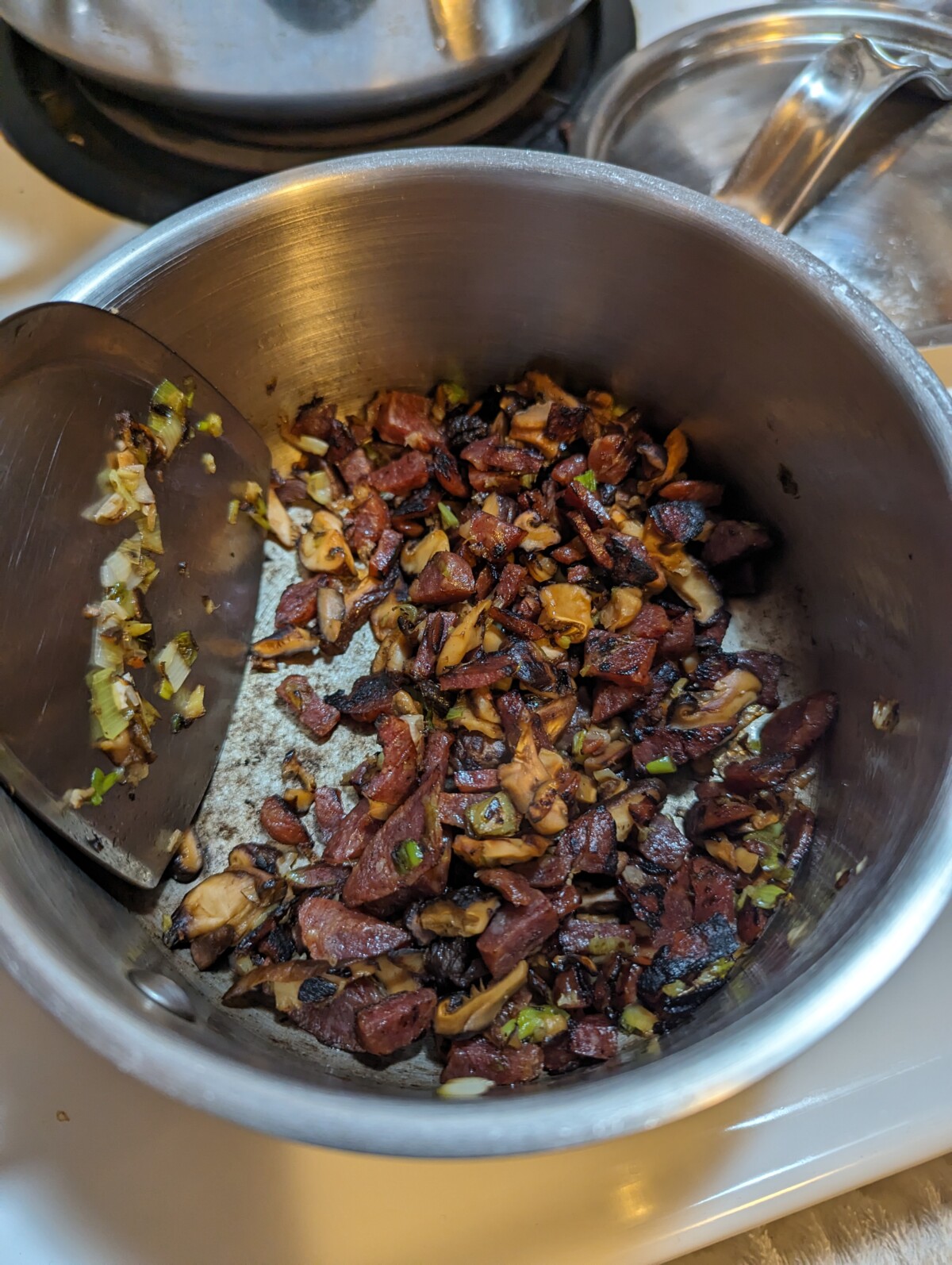
In a frying pan over medium-high heat, add in diced Chinese sausage, diced Chinese bacon (if using), and cook until lightly browned and the fat renders out.
Add in the Chinese mushrooms and fry until fragrant, about 2 minutes. Remove and set aside.
Remove the sausage, bacon and mushrooms, leaving the fat in the pan.
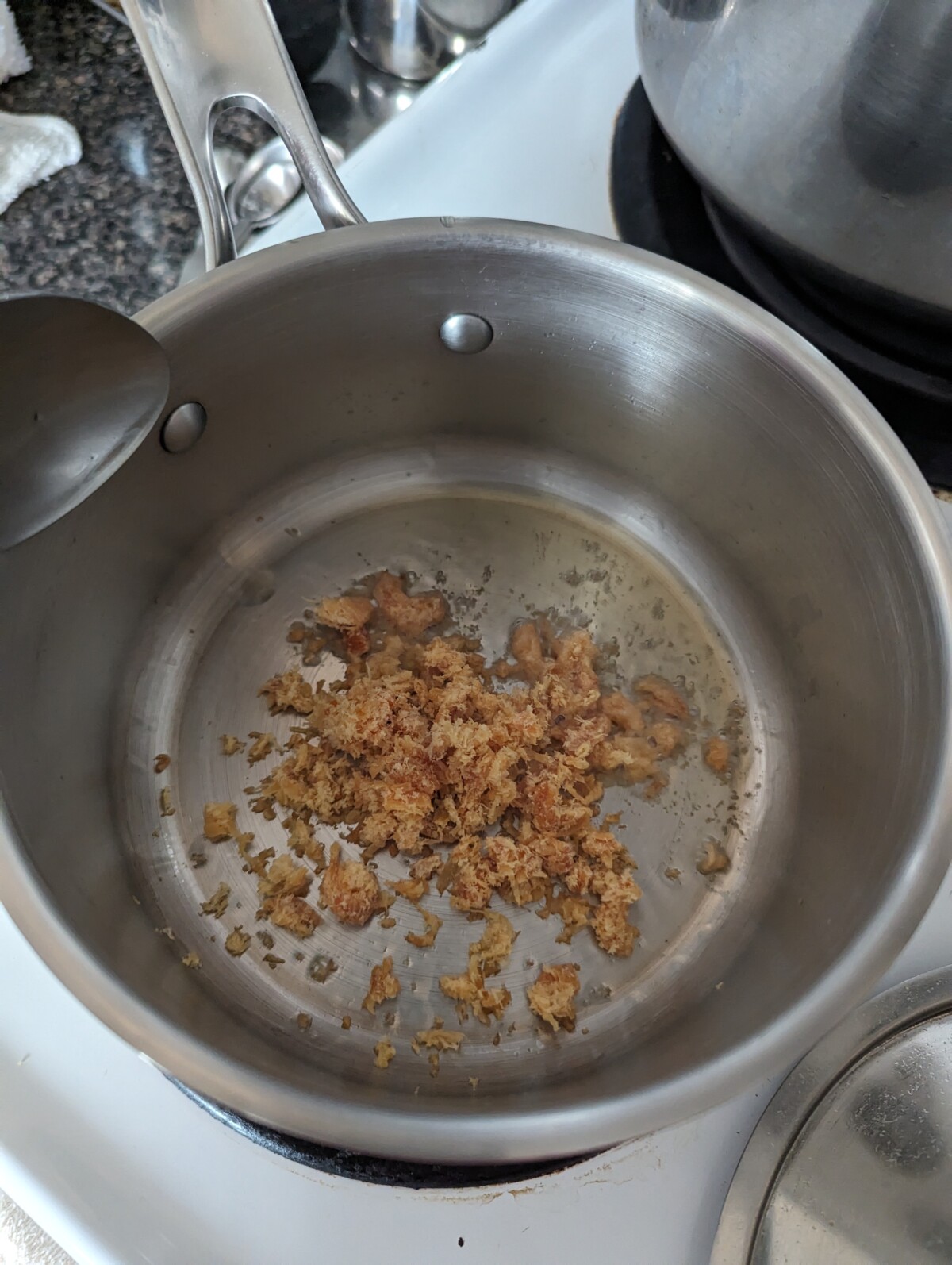
Sauté the dried shrimp in the pan until fragrant. Remove the dried shrimp and set aside for later.
Prepare the taro:
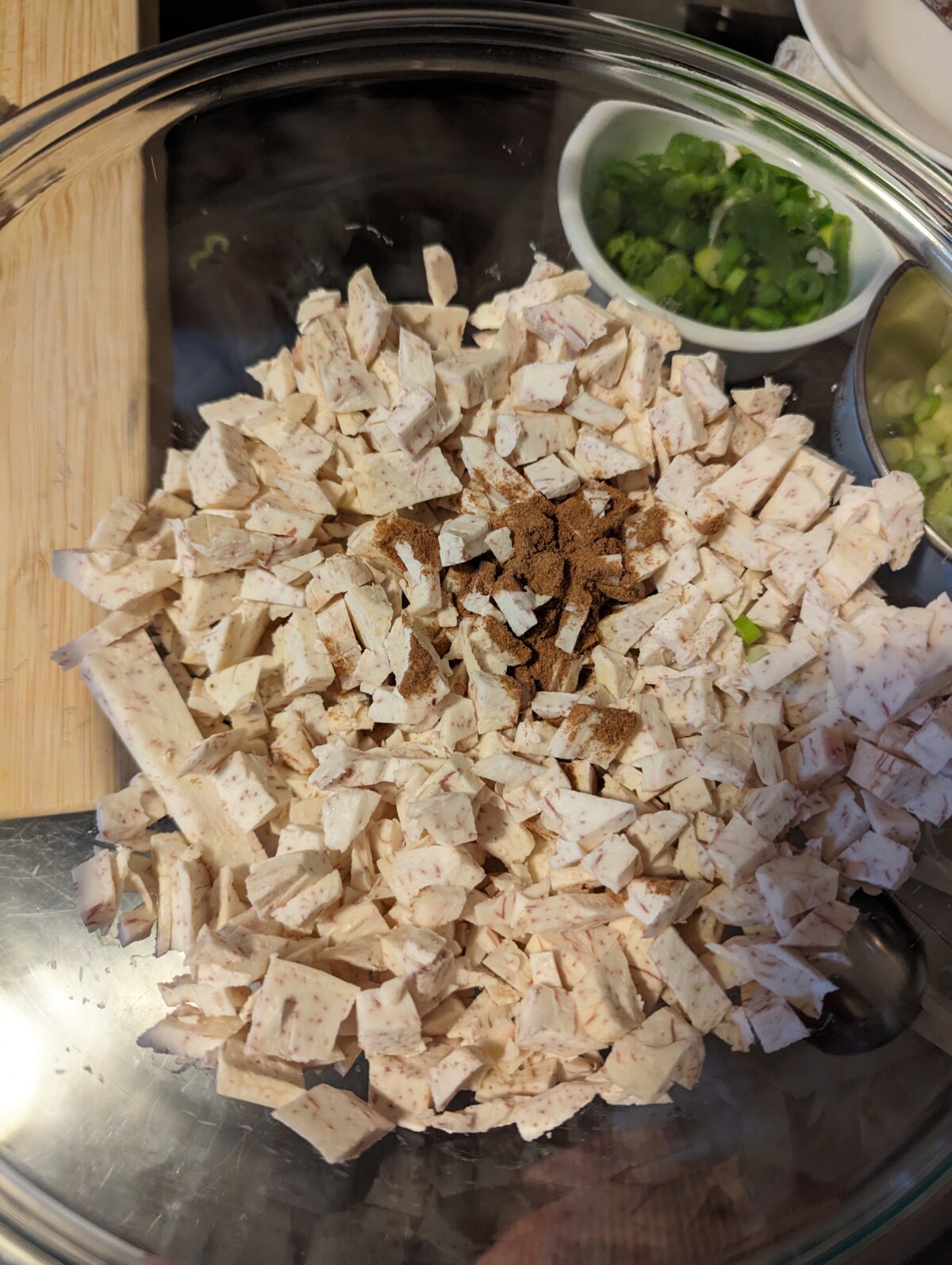
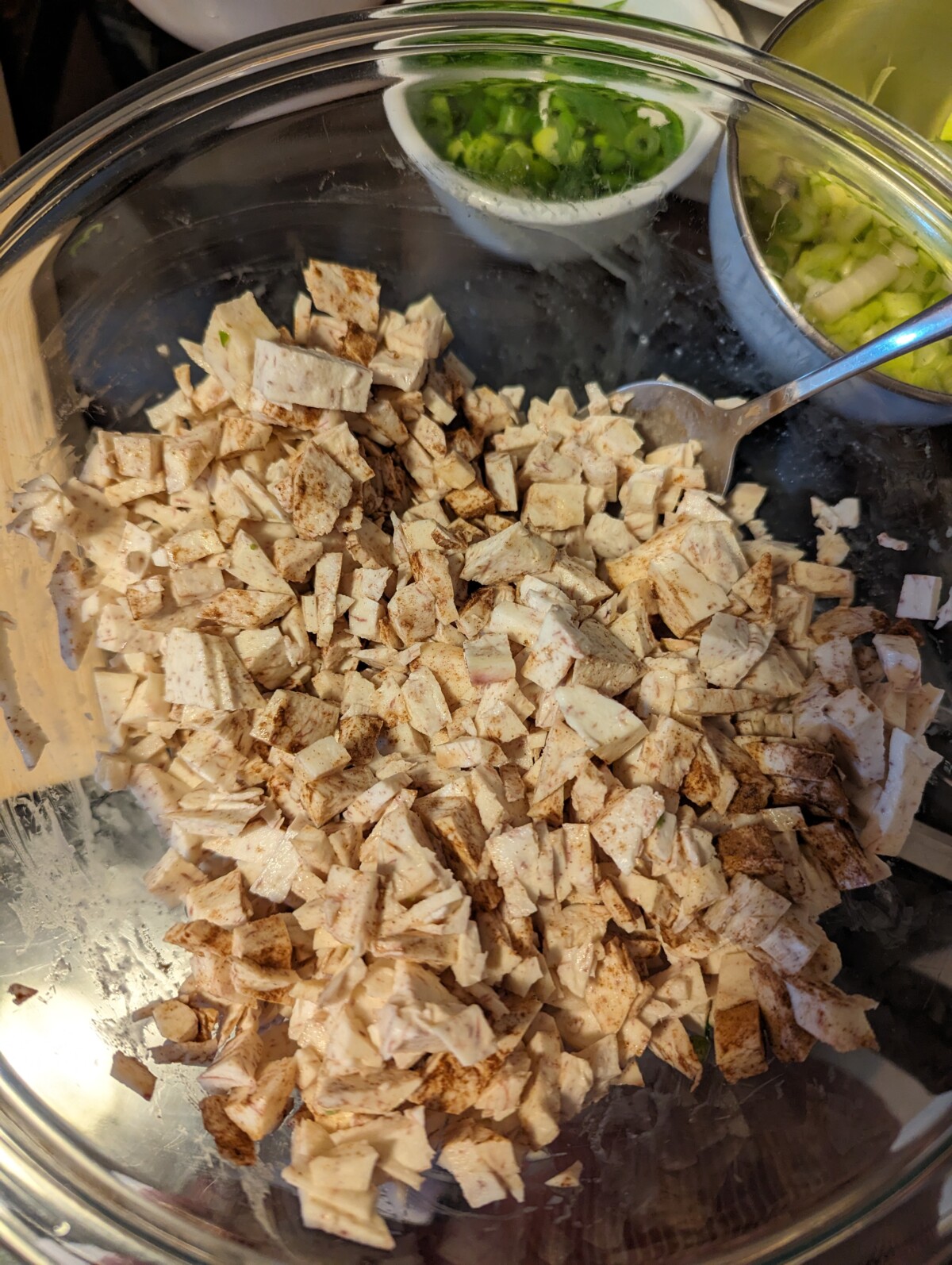
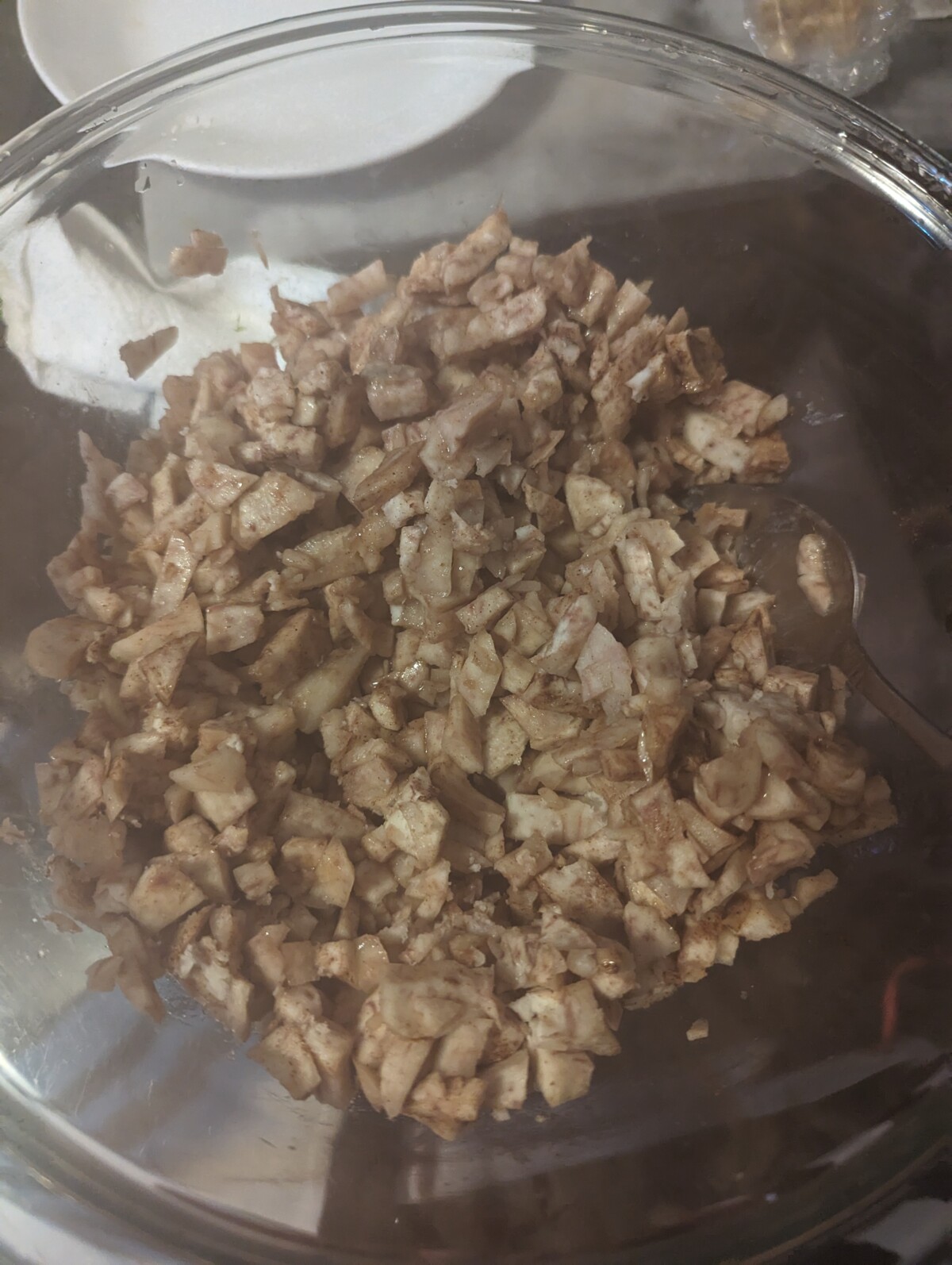
In a large bowl, add in taro, water and five-spice powder.
Cover with a lid and microwave on high power for 8-10 minutes, stirring every 2 minutes, until the taro has softened.
Combine:
In a very large heat-proof bowl, combine rice flour, all-purpose flour, tapioca starch, salt and black pepper.
Make a well in the center.
Pour the hot boiling water in the well and add in miso paste.
Stir the mixture with a wooden spoon until it turns into a dough.
Add in the par-cooked taro root, Chinese sausage, Chinese bacon, Chinese mushrooms, and carrot. Mix until well incorporated.
Transfer the mixture into the prepared pan.
Use a spatula dipped in water to smooth the surface of the mixture.
Steam:
Place the pan into a steamer over boiling water on high heat, cover and steam for 40 minutes.
Sprinkle reserved fried dried shrimp on top of the cakes and return to steam for another 2 minutes.
Remove from heat, garnish with green onion and let cool completely before slicing.

How to serve
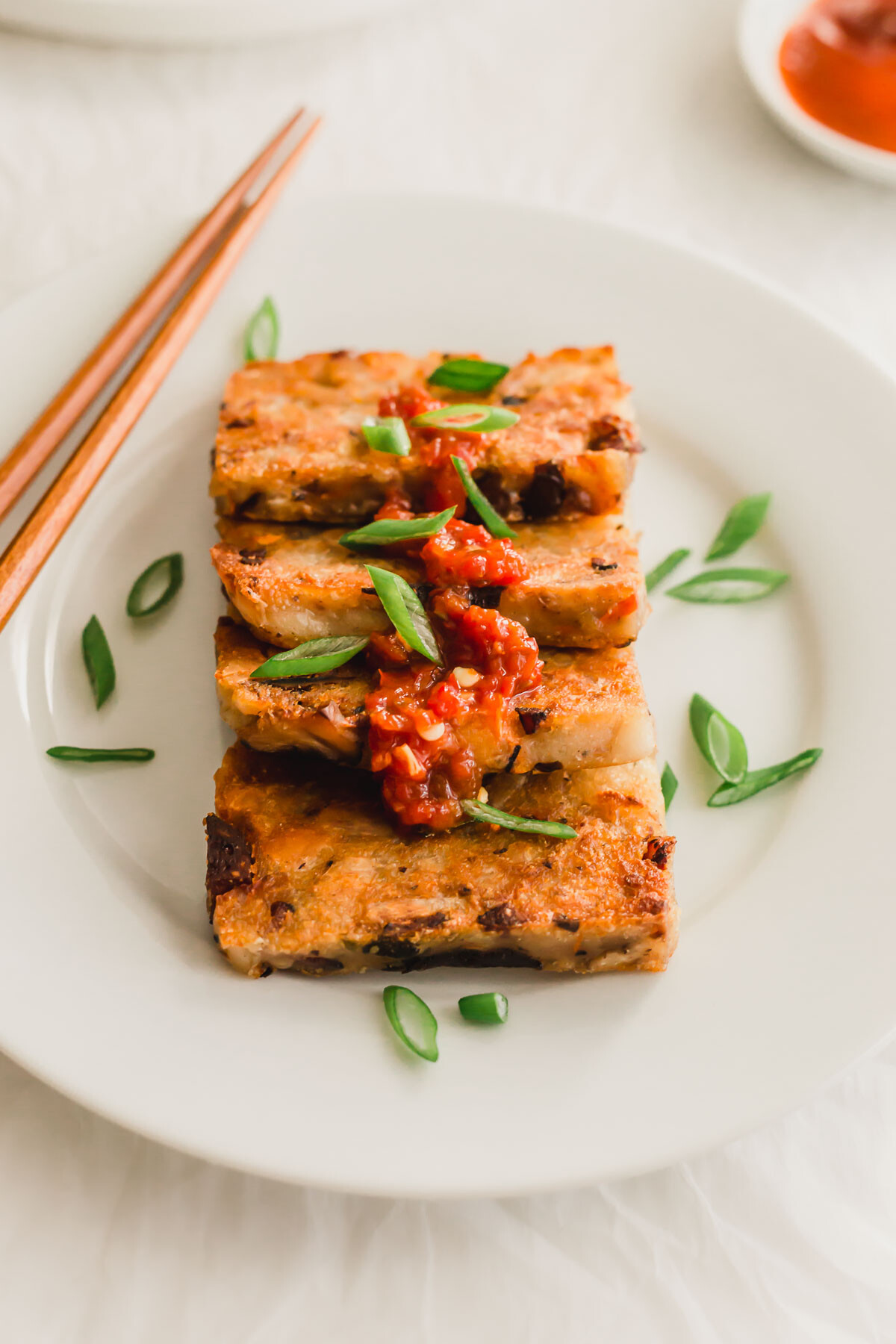
Serve steamed taro cake hot with sweet chili sauce or chili oil.
You can pan-fry the taro cakes by adding a little oil to a frying pan and pan-frying until all sides are golden, with a slight crust.
Pair the cakes with an assortment of dim sum dishes such as radish/turnip cake (lo bak go), shrimp dumplings (har gow), pork dumplings (siu mai), taro puff dumplings (wu gok) and a pot of your favorite hot tea.
How to store & reheat
Fridge:
Place the taro cakes in an airtight container in the fridge for up to 1 week.
Freezer:
You can also individually wrap the taro cakes in plastic wrap and freeze for up to 1 month.
Reheat:
Re-steam the wu tao gou in a steamer or steaming rack for 10-15 minutes (or longer if frozen), until heated through.
Expert tips
If you have a shell-fish allergy, omit the dried shrimps.
Other Chinese recipes you may like


Did you make this recipe?
Let me know if you try out this recipe -- I love seeing your creations! Tag me on Instagram @siftandsimmer and be sure to leave me a comment/rating below!
Steamed Taro Cake (芋頭糕)
For accuracy and precision in baking recipes, use weight (metric) measurements when available.
Ingredients
- 3 pieces Chinese sausage lap cheong, diced
- 1 piece Chinese bacon lap yuk, diced, optional
- 2 tablespoon dried shrimp washed and ground, optional
- 4 Chinese mushrooms soaked, and diced into small pieces
- 1 lb taro root peeled and shredded or chopped into tiny pieces
- ¼ C water or more as needed
- ½ teaspoon Chinese five-spice powder
- 190 g rice flour
- 150 g all-purpose flour
- 75 g tapioca starch
- ½ teaspoon sea salt
- ¼ teaspoon black pepper
- 700 ml hot boiling water
- 1 teaspoon miso paste
- 1 small carrot shredded
Topping:
- ½ C green onion chopped
Instructions
- Grease a piece of parchment paper and place it into a 9" pan (square or round).
Pan-fry meat and vegetables:
- In a frying pan over medium-high heat, add in Chinese sausage, diced Chinese bacon (if using), and cook until lightly browned and the fat renders out.
- Add in the Chinese mushrooms and fry until fragrant, about 2 minutes. Remove and set aside.
- Remove the sausage, bacon and mushrooms, leaving the fat in the pan.
- Sauté the dried shrimp in the pan until fragrant. Remove the dried shrimp and set aside for later.
Prepare the taro:
- In a large bowl, add in taro, water and five-spice powder.
- Cover with a lid and microwave on high power for 8-10 minutes, stirring every 2 minutes, until the taro has softened.
Combine:
- In a very large heat-proof bowl, combine rice flour, all-purpose flour, tapioca starch, salt and black pepper.
- Make a well in the center.
- Pour the hot boiling water in the well and add in miso paste.
- Stir the mixture with a wooden spoon until it turns into a dough.
- Add in the par-cooked taro root, Chinese sausage, Chinese bacon (if using), Chinese mushrooms, and shredded carrot. Mix until well incorporated.
- Transfer the mixture into the prepared pan.
- Use a spatula dipped in cold water to press and smooth the surface of the mixture.
Steam:
- Place the pan into a steamer over boiling water on high heat, cover and steam for 40 minutes.
- Sprinkle reserved fried dried shrimp on top of the cakes and return to steam for another 2 minutes.
- Remove from heat, garnish with green onion and let cool completely before slicing.
Nutrition
The nutritional information provided should be considered as approximate and is not guaranteed. Please use your best judgment to ensure food is safely prepared and/or a good fit for your diet.


Ben | Havocinthekitchen
Not familiar with this but it sounds delicious, Michelle - such a lovely and intriguing dish!
Michelle
Thanks Ben, sometimes you'll find this steamed taro cake at dim sum! 🙂
David @ Spiced
I've only had dim sum a couple of times, and I don't recall seeing steamed taro cakes on the menu. I loved reading this recipe, though - I think I would love these flavors! Definitely need to try this at home!
Michelle
Thanks David! It's packed full of flavor -- more so than the turnip steamed cake, I find 😉
Linsey
I bought a beautiful taro two days ago and tried out this taro cake recipe. It is so delicious and appetizing, the whole family love it as breakfast, lunch and dinner. Will make this again in the Chinese New Year. It is very easy to follow and make with your pictures and directions. Thanks Michelle!
Michelle
Hi Linsey, wow you're quick -- thanks so much for making the recipe! Glad it was a hit with your family 🙂
Healthy World Cuisine
This steamed taro cake is a labor of love. Lots of steps but the falvor, especially with the funky Chinese sausage is sublime.
Michelle
Thanks Bobbi, it really is worth the effort -- yes, the Chinese lap cheong is a must have for this taro cake! Adds so much umami flavor to it!
Raymund | angsarap.net
It’s one of those classic dim sum‑style dishes that feels both nostalgic and satisfying. Now I’m craving a slice pan‑fried the next day for that crispy edge.