
This versatile recipe for Chinese fish paste can be used to make Homemade Chinese Fish Cakes or Chinese Fish Balls. The fresh fish is processed and mixed with starch, to produce a bouncy textured fish cake or fish ball.
SAVE THIS RECIPE!
Get this recipe in your inbox, plus delicious new ones every week!
What is Chinese fish paste?
Chinese fish paste is a sticky paste made from processed fresh fish (usually snapper, mackerel), mixed with starch and seasonings.
The paste is mechanically mixed/beaten to produce a bouncy texture.
From there, the paste can be used to fill tofu, vegetables, or made into fish cakes or fish balls.
What are Chinese fish cakes?
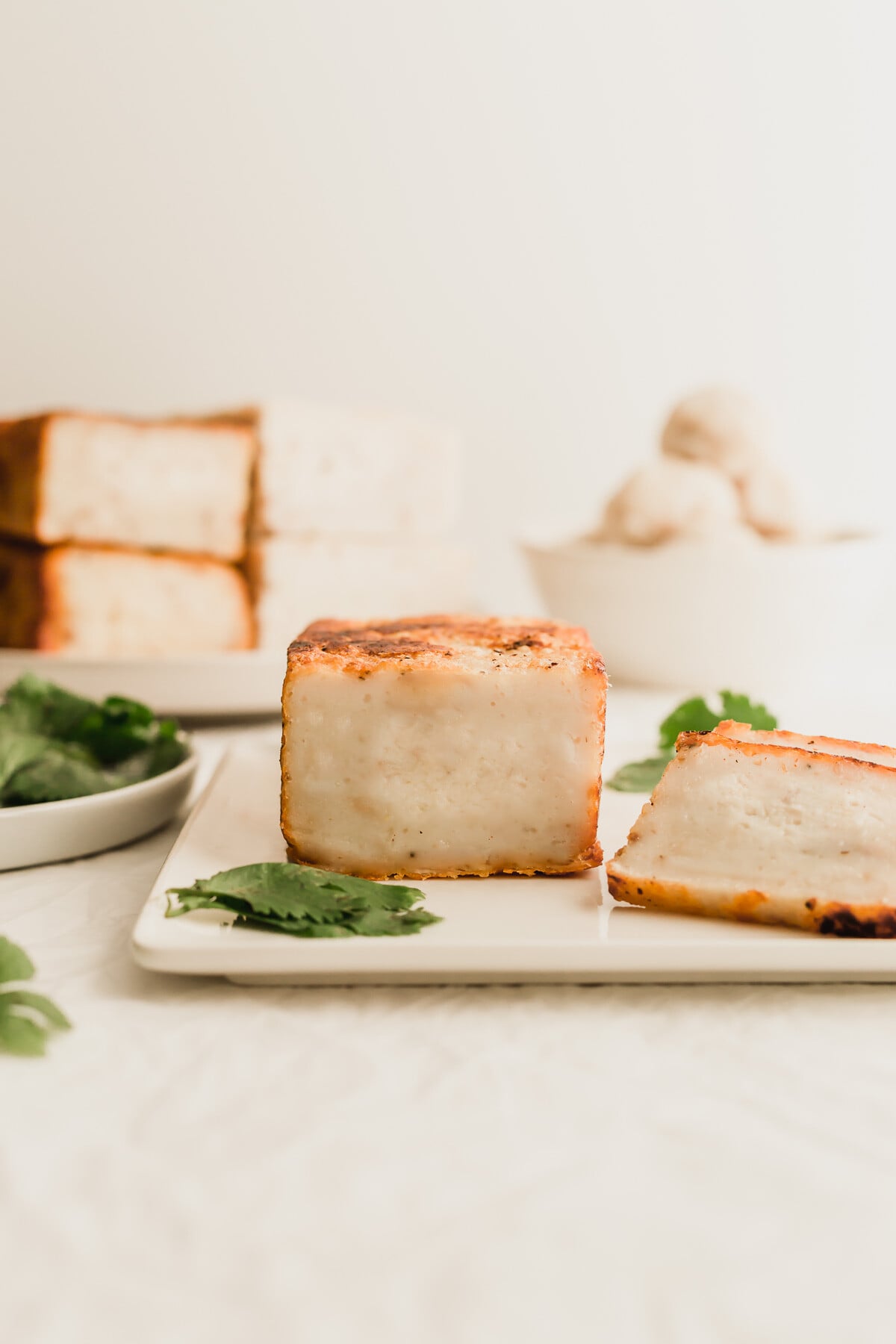
Chinese fish cakes (yu biang) are made from fish paste that is steamed until cooked through, and then typically deep-fried to give it a golden crust.

What are Chinese fish balls?
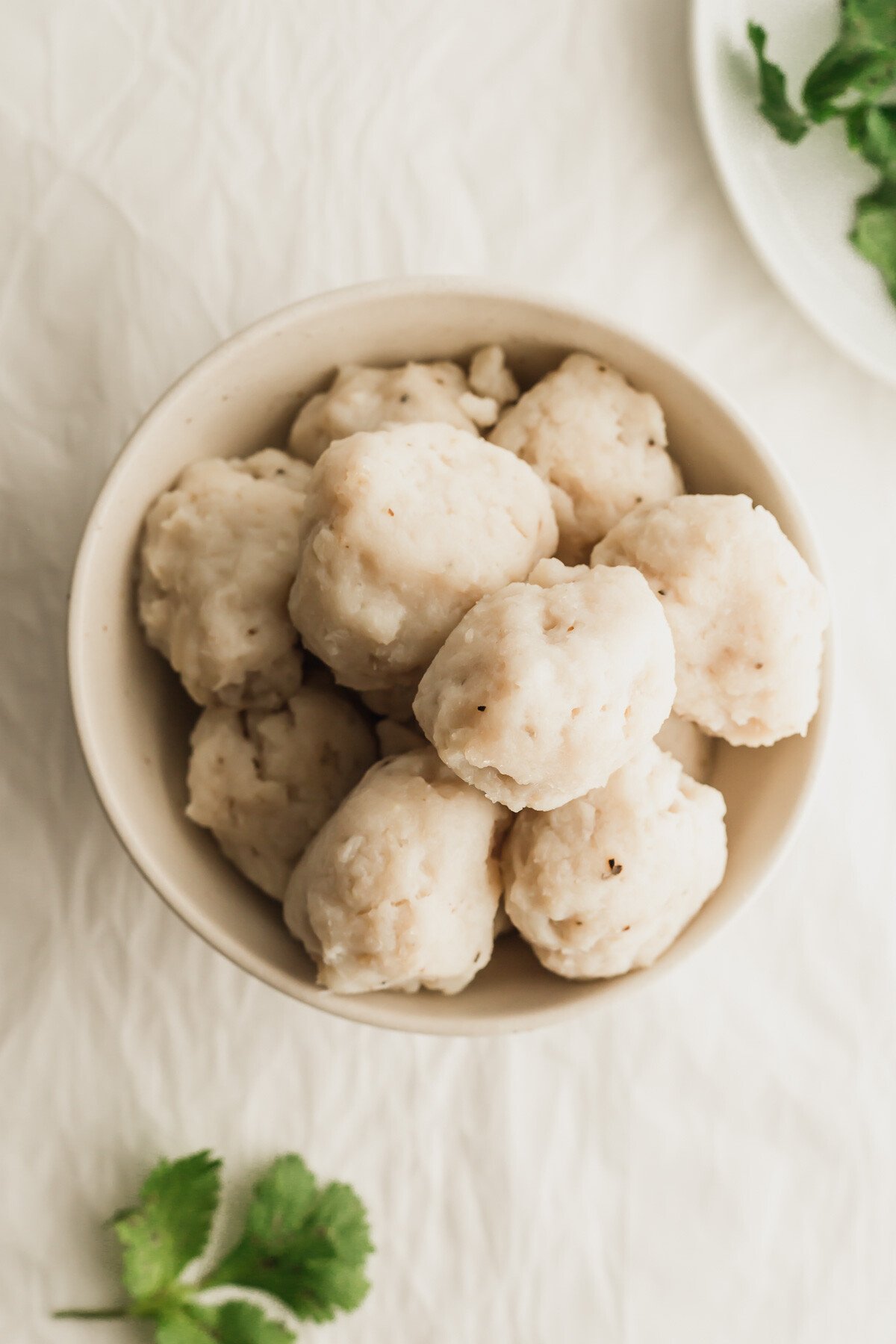
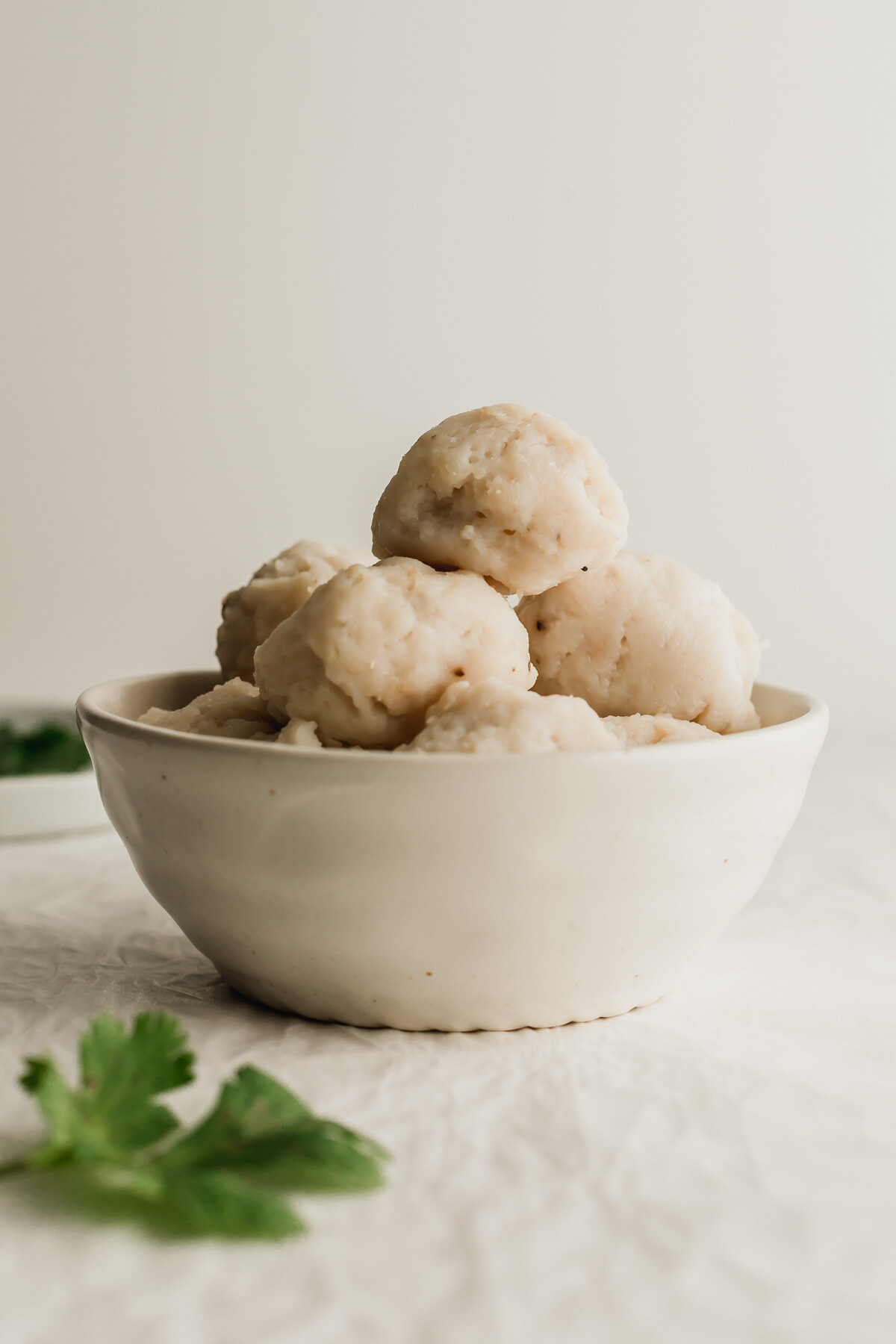
Similar to making Vietnamese beef balls, Chinese fish balls are made from fish paste and shaped into balls before cooking in water.
Deep-frying the fish balls gives them a golden yellow exterior.
Chinese fish balls are served in many soup dishes such as savory tang yuan, hot pot, with noodles (eg. kolo mee), or on it own in Hong Kong Curry Fish Balls.
Why you'll love this recipe
This recipe for homemade fish paste:
Is versatile: you can use the fish paste to make Chinese fish cakes, fish balls, or stuff them in tofu, vegetables, wrap in bean curd, or use as a swap for the shrimp paste to make fish paste toast.
Yields a bouncy texture: choosing a fish with lots of gel is key to producing bouncy fish cake/fish ball.
Is all-natural: there are no artificial chemicals, flavors, or preservatives, which are common in commercially-produced fish cakes/fish balls.
Minimal in ingredients: with fresh fish, egg white and a few seasonings, you can make this fish paste easily at home.
Gluten-free: this easy Asian fish cake recipe is naturally gluten-free, making it suitable for those with dietary restrictions.
Special equipment you'll need
- heavy duty food processor: for processing the fish meat
- stand mixer with paddle attachment: to beat the fish into a paste
- spatula
- baking sheet: for making fish cakes
- steamer: for cooking fish cakes
- large basin: for making fish balls
Ingredients you'll need
- fresh fish (鮮魚): snapper, or mackerel (preferably yellow-tail); note: not all types of fish are suitable for making fish cakes/fish balls
- egg whites (蛋清): for binding the mixture
- sea salt (鹽): or you can also use soy sauce
- black pepper (黑胡椒)
- sand ginger powder (沙薑粉): to reduce any fishy aroma
- ice cold water (冰水)
- tapioca starch (菱粉): or substitute with cornstarch
Where to buy?
You can find these ingredients at Asian grocery stores.
How to make fish paste
If the fish is large, cut into smaller chunks.
Add the fish to a food processor and pulse to break it into smaller pieces.
Transfer the fish to a stand mixer bowl, fitted with a paddle attachment.
Add egg whites, salt, and black pepper and begin beating on low speed.
Gradually pour the cold water in increments.
Continue to beat the fish into a paste for 10 minutes or more until it turns into a sticky paste.
Add in the tapioca starch in a few batches and continue with the process until all the starch is incorporated. (When adding the starch, it will disperse into the air, so use a large kitchen towel to cover around the bowl to prevent the starch from flying.)
Continue to beat the fish for 5 more minutes or until the paste becomes very sticky.


How to make Chinese fish cakes
Prepare a small, shallow pan (I used an 8" x 10" x 1" pan) by lining it with parchment paper.
Transfer the fish paste to the prepared pan. Spread and compact the fish paste so there are no air pockets.
Tip: use a spatula dipped in cold water to smooth out the fish paste.
Chill the fish paste in the fridge for 30 minutes.
Steam:
Steam the fish paste on high heat for 4 minutes, then reduce the heat to medium high for about 12-15 minutes, or until fully cooked.
Once the fish cake has completely cooled down, cut it into 6 portions, about 2½" x 5" in size.
Pan-fry the fish cakes (optional):
Heat up a frying pan with a little vegetable oil and pan fry the fish cakes until golden in color.
Slice into thin slices and serve as desired.


How to make Chinese fish balls
Prepare a bowl of ice cold water. Add a little salt (½ tsp) to the water.
Take a handful of fish paste in your hand, with your thumb and index fingers forming a circle (O).
Squeeze the paste through the hole, forming a sphere.
Use a spoon to scoop the ball and drop the fish ball into the bowl of cold water.
Repeat with the remainder of the fish paste.
In a pot of tepid water, add in the fish balls and the ice water it was sitting in.
Turn on the heat and cook over low heat, until the fish balls float.
Transfer the cooked fish balls to a basin of ice cold water to halt the cooking process.
Drain and serve as desired.

How to use homemade fish paste
For the raw fish paste, you can use it to stuff tofu or vegetables (eg. mushroom, peppers or eggplant), wrap it in fresh bean curd sheets, or spread it on bread to make fish paste toast.
Serve the fish balls in curry sauce, in a soup broth, in hot pot, or as a topping on laksa noodles, or dry-style noodles along with veggies such as yu choy.
Slice up the fish cakes, stir fry and add it to noodles, laksa, fried rice or Singapore-style noodles.
How to store
Fridge:
Store the cooked fish balls and fish cakes in an airtight container in the fridge for up to 1 week.
Freezer:
Store the fish balls in an airtight container or freezer bag and freeze for up to 3 months.
Wrap the fish cakes in plastic wrap and place into a freezer bag. Freeze for up to 3 months.
Expert tips & notes
Not all fish is suitable for making fish balls.
Be sure to choose a high-gelling fish, such snapper or mackerel (yellow-fin). Other types of fish will not work.
You can choose to deep-fry the finished fish cakes and fish balls, which will give it more flavor.
For a fun spin, use a cookie cutter to cut out different shapes.
To eliminate air pockets, use a large flat spatula dipped in cold water to spread the fish paste and smooth it out.
Other delicious recipes you may like


Did you make this recipe?
Let me know if you try this easy Chinese fish cake recipe -- I love seeing your creations! Tag me on Instagram @siftandsimmer and be sure to leave me a comment/rating below!

Chinese Fish Cakes/Fish Balls From Homemade Fish Paste (魚餅/魚丸/魚漿)
Save this recipe!
Get this recipe in your inbox, plus delicious new recipes every week!
For accuracy and precision in baking recipes, use weight (metric) measurements when available.
Ingredients
- 1000 g fresh fish (鮮魚) (snapper) cleaned and deboned
- 66 ml egg white (蛋清) appx 2 large egg whites
- 10 g Himalayan salt (鹽) 2 tsp
- ½ teaspoon black pepper (黑胡椒)
- ½ teaspoon sand ginger powder (沙薑粉)
- 150 ml ice-cold water (冰水) or 170g ice-cold water for thinner fish paste
- 120 g tapioca starch (菱粉)
Instructions
Make the fish paste:
- If the fish is large, cut into smaller chunks.
- Add the fish to a food processor and pulse to break it into smaller pieces.
- Transfer the fish to a stand mixer bowl, fitted with a paddle attachment.
- Add egg whites, salt, and black pepper and begin beating on low speed.
- Gradually pour the cold water in increments.
- Continue to beat the fish into a paste for 10 minutes or more until it turns into a sticky paste.
- Add in the tapioca starch in a few batches and continue with the process until all the starch is incorporated. (When adding the starch, it will disperse into the air, so use a large kitchen towel to cover around the bowl to prevent the starch from flying.)
- Continue to beat the fish for 5 more minutes until the paste becomes very sticky.
For fish cakes:
- Prepare a small, shallow pan (I used an 8" x 10" x 1" pan) by lining it with parchment paper.
- Transfer the fish paste to the prepared pan. Spread and compact the fish paste so there are no air pockets.
- Tip: use a spatula dipped in cold water to smooth out the fish paste.
- Chill the fish paste in the fridge for 30 minutes.
Steam:
- Steam the fish paste on high heat for 4 minutes, then reduce the heat to medium
- high for about 12-15 minutes, or until fully cooked.
- Once the fish cake has completely cooled down, cut it into 6 portions, about 2½" x 5" in size.
Pan-fry the fish cakes (optional):
- Heat up a frying pan with a little vegetable oil and pan fry the fish cakes until golden in color.
- Slice into thin slices and serve as desired.
For fish balls:
- Prepare a bowl of ice cold water. Add a little salt (½ tsp) to the water.
- Take a handful of fish paste in your hand, with your thumb and index fingers forming a circle (O).
- Squeeze the paste through the hole, forming a sphere.
- Use a spoon to scoop the ball and drop the fish ball into the bowl of cold water.
- Repeat with the remainder of the fish paste.
- In a pot of tepid water, add in the fish balls and the ice water it was sitting in.
- Turn on the heat and cook over low heat, until the fish balls float.
- Transfer the cooked fish balls to a basin of ice cold water to halt the cooking process.
- Drain and serve as desired.
Nutrition
The nutritional information provided should be considered as approximate and is not guaranteed. Please use your best judgment to ensure food is safely prepared and/or a good fit for your diet.


Ben | Havocinthekitchen
I love chunky fish cakes that are typical for North America, but I'm not familiar with the Chinese version. What an interesting and intriguing texture - would like to try some 🙂
Michelle
Thanks Ben, you'll definitely have to give them a try -- such a versatile recipe that can be used in many dishes!
David @ Spiced
I had no idea you could make fish paste at home! I guess it makes sense as I enjoy making all sorts of things at home (vs. storebought versions), but I've never thought about fish paste before. Thanks for sharing the tips!
Michelle
Yes! It does take a bit of time to make from scratch, but it is one of those recipes where you can make a big batch and freeze for later. 🙂
Dawn
What a great post, Michelle! I love all the details! Makes me want to give these homemade fish cakes (or fish balls) a try. Nothing like homemade, and I bet these would be so flavourful and a great addition to so many dishes.
Michelle
Thank you Dawn! It is such a versatile recipe that you can add to so many different dishes 🙂
Raymund | angsarap.net
I can't wait to give it a try and experiment with different ways to use this homemade fish paste in my cooking! Never had made my own one before.
Michelle
You'll have to give it a try and let me know how it goes!