
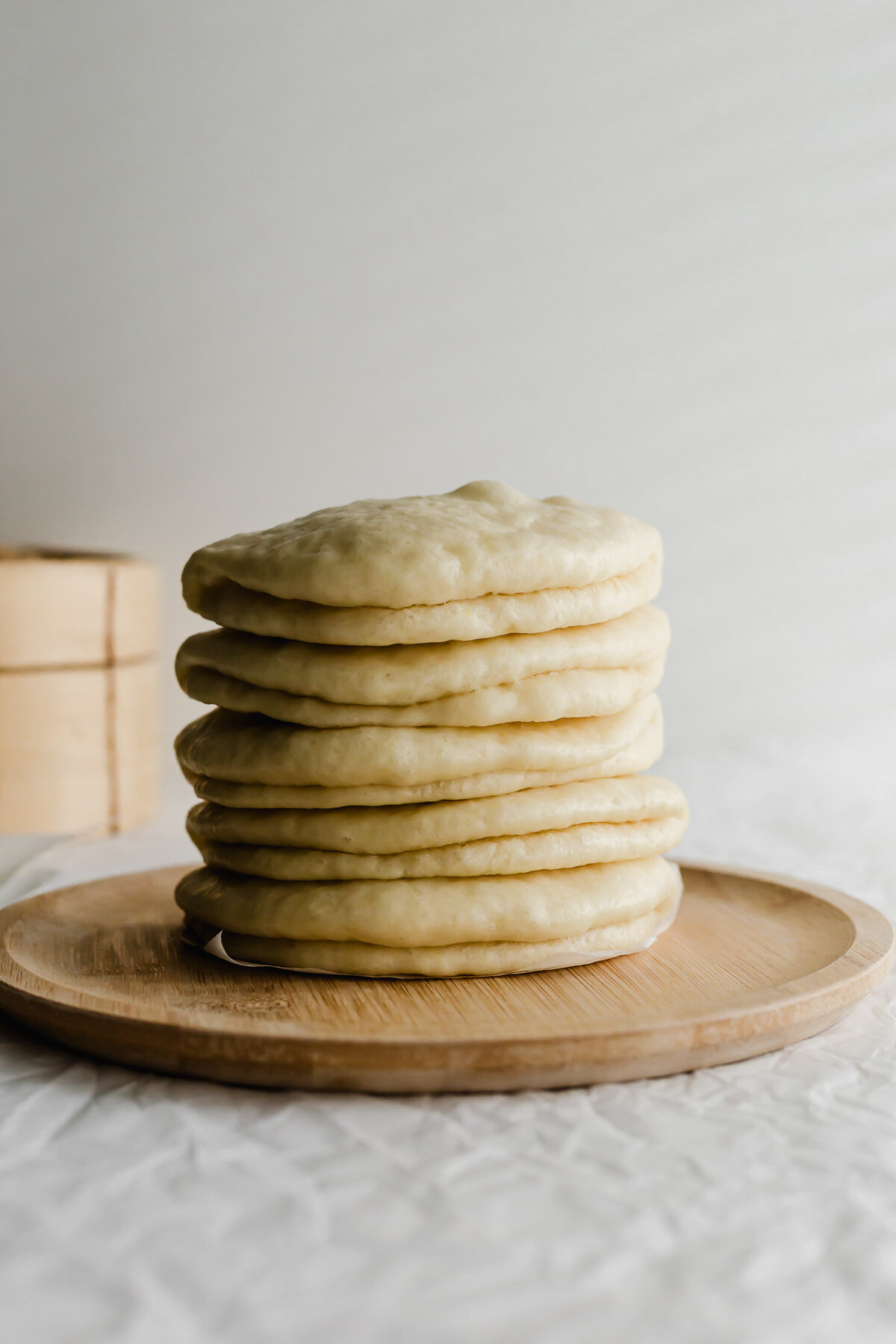
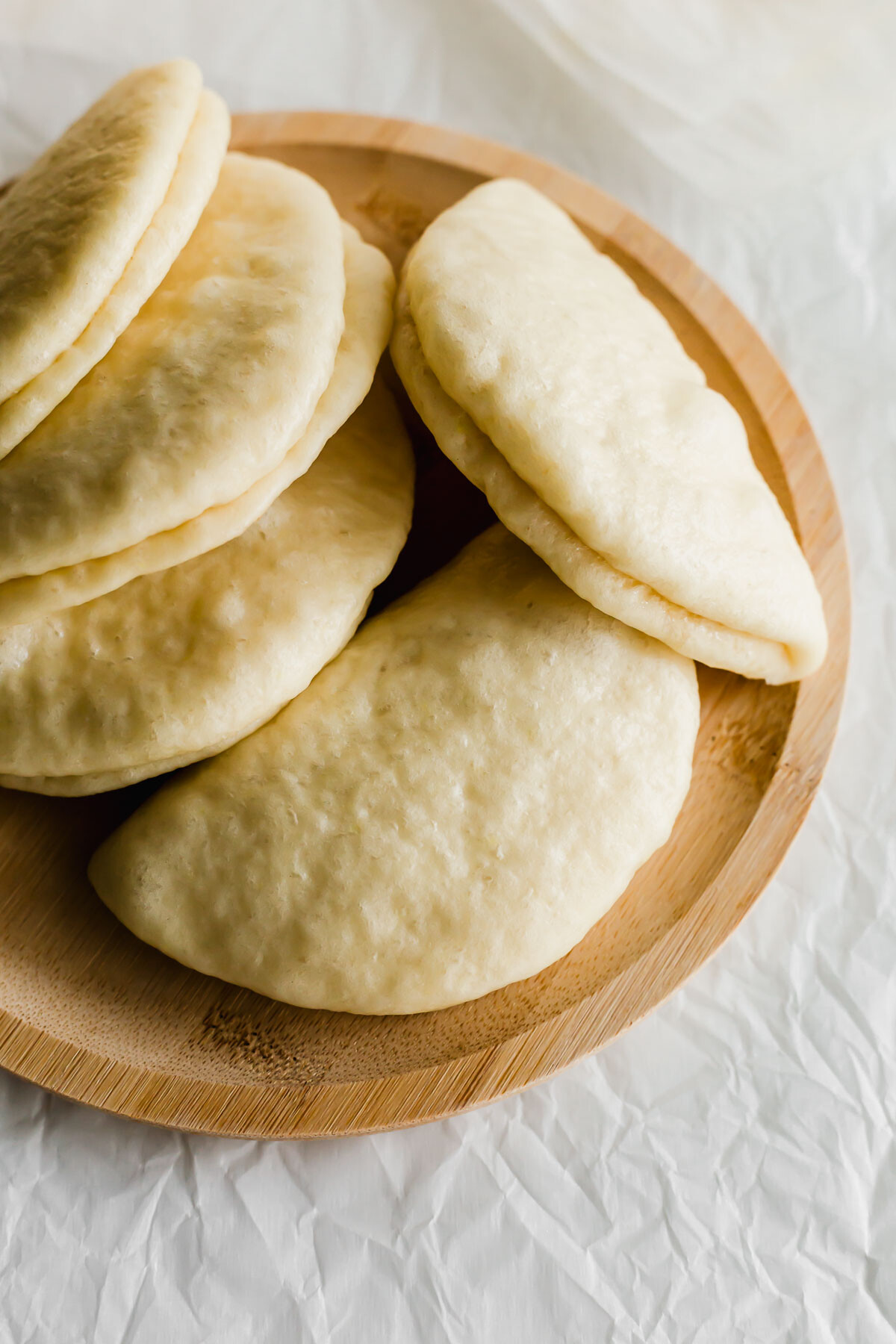
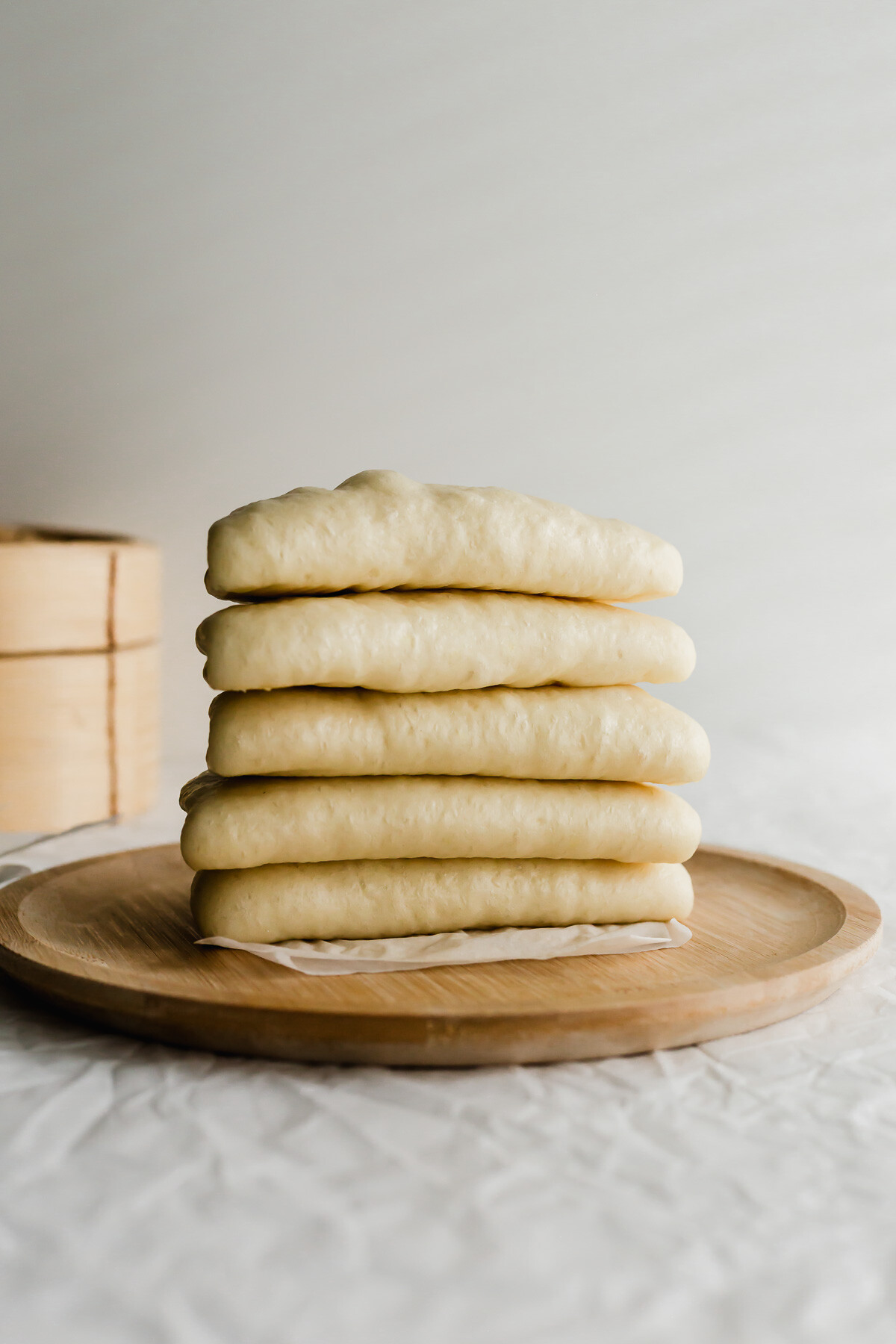
These pillowy-soft Chinese Steamed "Bao Buns" (also known as lotus leaf buns [荷叶包]) are shaped like a folded clam shell and are the perfect vehicle for filling with flavorful meats and veggies.
Want to save this recipe?
Enter your email & I'll send it to your inbox. Plus, get great new recipes from me every week!
Why you'll love this recipe
Whether you stuff them with braised pork belly, crispy tofu, or roasted duck, these Chinese bao buns are a blank canvas for all your favorite fillings.
Soft, fluffy texture: using both yeast and baking powder ensures the buns are light and fluffy.
Customizable fillings: load them up with whatever you like -- braised pork belly is classic, roasted duck, smoked duck, or even fried chicken.
Make-ahead: these buns freeze beautifully and reheat in minutes for an easy meal any day.
What are lotus leaf buns?
Despite the name, lotus leaf buns don't actually contain lotus leaves.
They're named for their folded shape that resembles a lotus leaf when steamed. [As an aside, lotus leaves are used for steaming lo mai gai (sticky rice in lotus leaves)].
Similar to Chinese hamburger buns (rou jia mo), these steamed buns are a popular street food, eg. gua bao stuffed with Taiwanese-style pork belly.
You might also see them commonly referred to as "bao buns," which is a bit of a misnomer as "bao" in Chinese means "bun."
It is is essentially calling them "bun bun," not unlike "chai tea," as an example.
What's the difference between lotus leaf buns, baozi and mantou?
Mantou is a plain steamed bun with no filling, which is commonly enjoyed in Northern China.
Lotus leaf buns are a plain steamed bun, but it's folded and filled with toppings. "Gua bao" refers to "cut bun" (in Fujianese), which refers to the line that seemingly appears on the bun, looking like it was cut with a knife.
On the other hand, baozi refers to a steamed bun with filling -- there are many types of baozi, including vegetable & pork buns, red bean buns, and steamed BBQ pork buns (char siu bao).
Special equipment you'll need
- bamboo steamer: for steaming the buns
- parchment squares: about 3x3"
Ingredients you'll need
- bao flour: is a flour blend for making steamed buns; lower in protein and higher in starch, finely milled, sometimes bleached and pre-mixed with leaveners (or additives); sometimes called Hong Kong flour. If you don't have bao flour, you can use 2 parts of all-purpose flour + 1 part cake flour as a quick substitute
- baking powder: leavener to make the buns fluffy
- warm water: to activate the yeast
- granulated sugar: adds a little sweetness
- active dry yeast: another leavener that helps the buns rise
- vegetable oil: or pork lard
- toasted sesame oil: for brushing; or neutral vegetable oil
Where to find bao flour?
You can find bao flour (also known as pau flour or Hong Kong flour) in Asian supermarkets.
As a note, the bao flour I used did not list any additives or leaveners on the ingredient list. Just specialty flour.
How to make Chinese steamed "bao buns"
Make the dough:
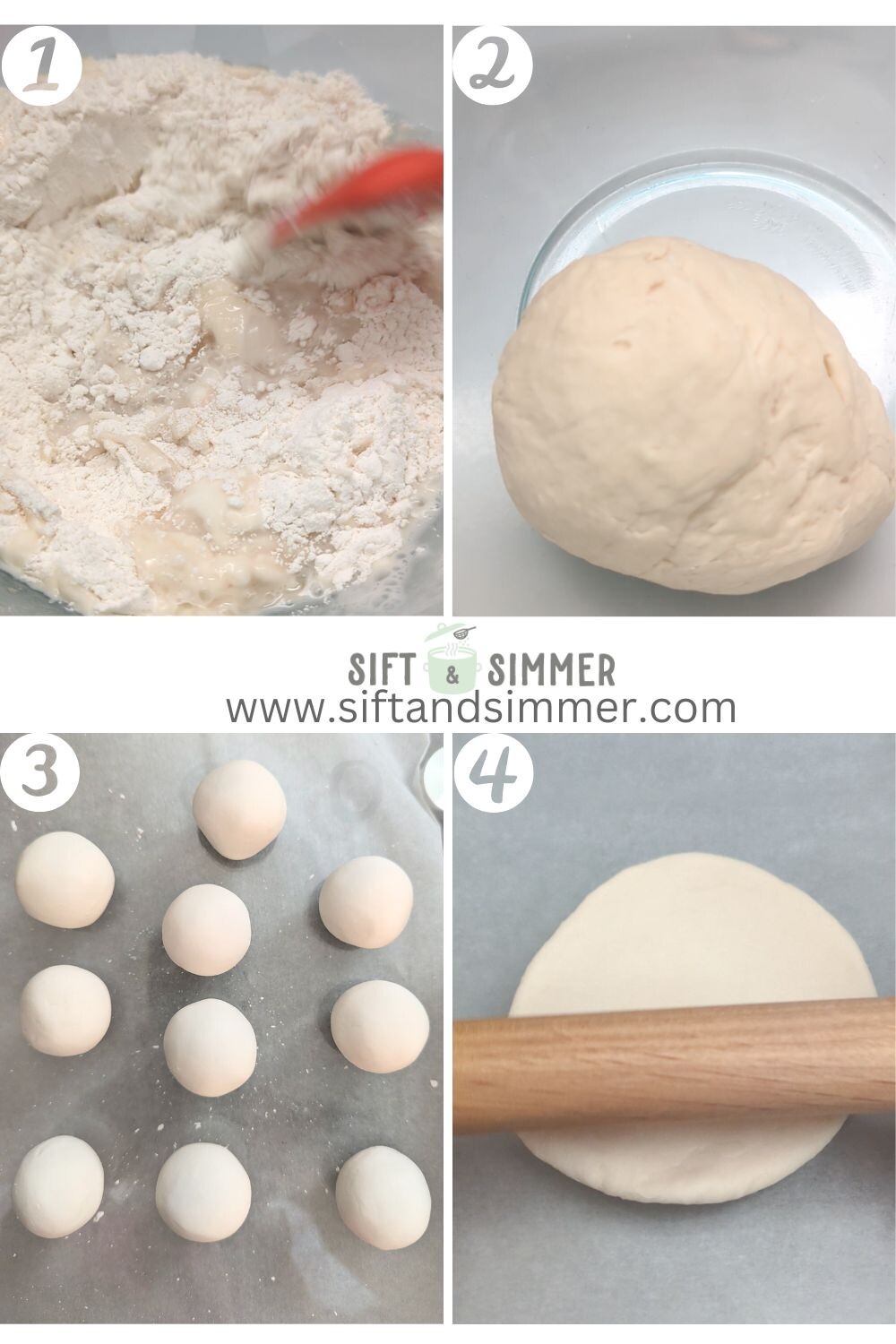
In a bowl, combine the flour, baking powder, and give it a quick whisk.
In a separate small bowl, add the warm water, sugar and yeast. Leave it for a few minutes for the yeast to activate.
Once the yeast is bubbly, pour it into the flour mixture. Add in the oil and knead with your hands until smooth and shiny, about 10 minutes.
Cover the dough and let it rest for 20 minutes.
Divide the rested dough into 10 equal portions, and roll into smooth spheres (about 35g each).
Use a rolling pin to roll out the dough into an oval shape, about 4-5" long.
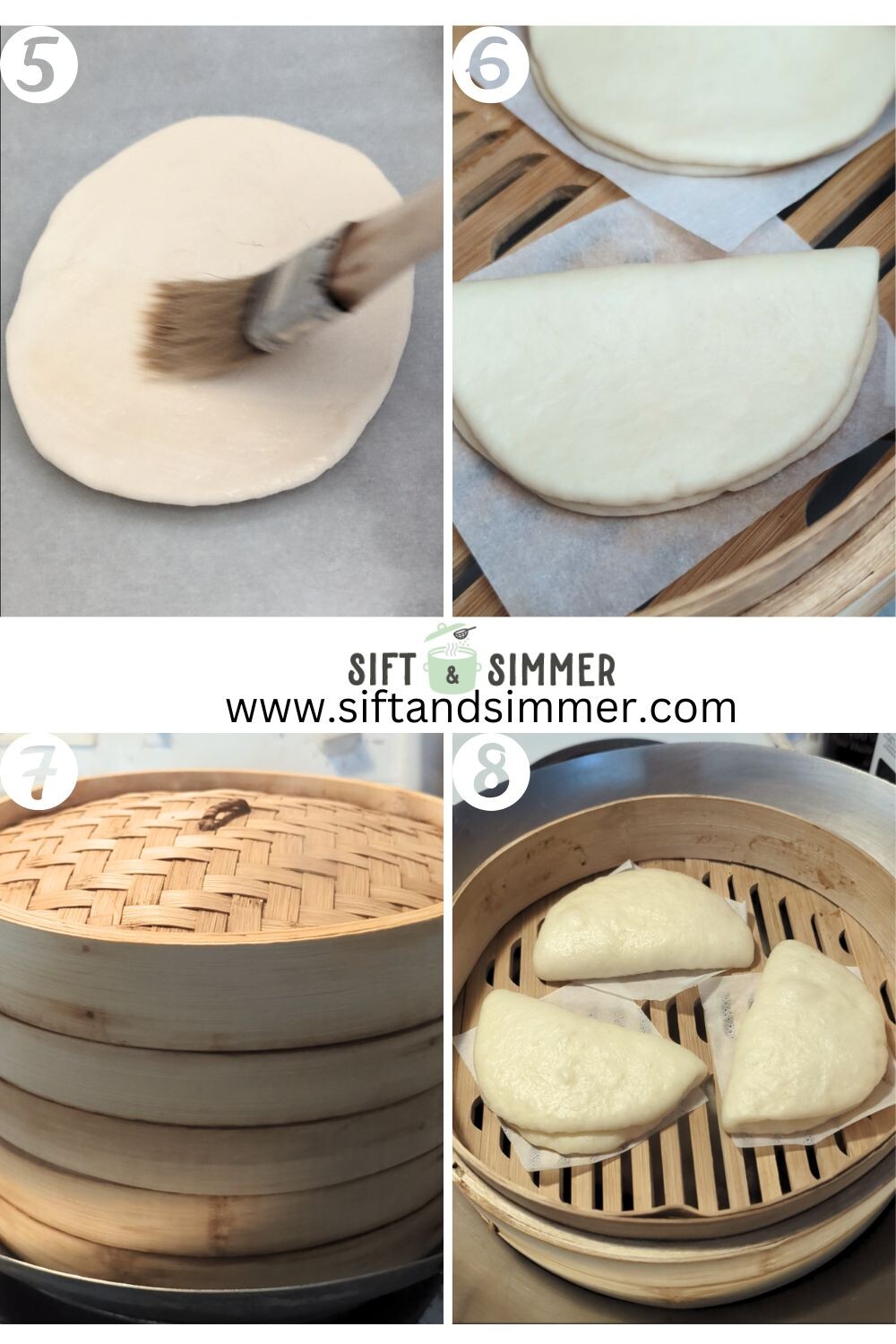
Brush half of the dough with sesame oil, and fold it over in half.
Place onto a parchment square and set into a bamboo steamer in one single layer (leaving enough room for expansion).
Repeat with the remainder.
Place the steamer lid on.
Steam:
Add about 4 C hot boiling water and 4 C room temperature water into a wok or large pot that you will use to steam the buns.
Place the steamer over the warm water and leave to proof for 20 minutes.
Turn to high heat and once the water has come to a boil, steam the buns for 15 minutes.
Turn off the heat and leave to rest for 5 minutes before opening the lid.
After 5 minutes have elapsed, crack open the lid a little to let the steam escape to avoid deflating the buns.
Remove the buns, fill with your favorite fillings and enjoy warm.
What to fill the steamed bao buns with
The sky's the limit when it comes to what you can fill the buns with.
Try adding classic Taiwanese braised pork belly, char siu (BBQ pork), roasted duck, siu yuk (roasted pork belly), shredded or sliced beef shank, Taiwanese popcorn chicken, or Korean fried chicken.
Pair the fillings with veggies and sauces like pickled mustard greens, fresh cucumber, cilantro, and hoisin sauce.
How to store
Freezer: let buns cool completely, then place on a tray to freeze until solid. Transfer to a freezer bag or airtight container and freeze for up to 1 month.
To reheat: steam directly from frozen for about 6-8 minutes, or until warm and soft.
Expert tips
Don't skip resting after shaping -- it gives the buns their light, fluffy texture.
Make sure the water isn't touching the buns in the steamer.
Use high heat to steam the buns.
*Do not open the lid of the steamer for the first 5 minutes after steaming. After 5 minutes have elapsed, crack open the lid slightly to let the steam escape before completely removing the lid. This helps prevent the buns from deflating due to the pressure and temperature difference.
You can use a towel under the steamer lid to catch condensation and prevent water from dripping onto the buns.
More steamed bun recipes you may like


Other delicious recipes you may like


Did you make this recipe?
Let me know if you try out this recipe -- I love seeing your creations! Tag me on Instagram @siftandsimmer and be sure to leave me a comment/rating below!
Steamed Chinese "Bao Bun" (Lotus Leaf Buns)
For accuracy and precision in baking recipes, use weight (metric) measurements when available.
Ingredients
- 250 g bao flour or 167g all-purpose flour + 83g cake flour
- 5 g baking powder
- 135 ml warm water
- 15 g granulated sugar
- 4 g active dry yeast
- 10 ml vegetable oil or pork lard
- 1 teaspoon toasted sesame oil for brushing
Instructions
Make the dough:
- In a bowl, combine the flour, baking powder, and give it a quick whisk.
- In a separate small bowl, add the warm water, sugar and yeast. Leave it for a few minutes for the yeast to activate.
- Once the yeast is bubbly, pour it into the flour mixture. Add in the oil and knead with your hands until smooth and shiny, about 10 minutes.
- Cover the dough and let it rest for 20 minutes.
- Divide the rested dough into 10 equal portions, and roll into smooth spheres (about 35g each).
- Use a rolling pin to roll out the dough into an oval shape, about 4-5" long.
- Brush half of the dough with sesame oil, and fold it over in half.
- Place onto a parchment square and set into a bamboo steamer in one single layer (leaving enough room for expansion).
- Repeat with the remainder.
- Place the steamer lid on.
Steam:
- Add about 4 C hot boiling water and 4 C room temperature water into a wok or large pot that you will use to steam the buns.
- Place the steamer over the warm water and leave to proof for 20 minutes.
- Turn to high heat and once the water has come to a boil, steam the buns for 15 minutes.
- Turn off the heat and leave to rest for 5 minutes before opening the lid.
- After 5 minutes have elapsed, crack open the lid a little to let the steam escape to avoid deflating the buns.
- Remove the buns, fill with your favorite fillings and enjoy warm.
Nutrition
The nutritional information provided should be considered as approximate and is not guaranteed. Please use your best judgment to ensure food is safely prepared and/or a good fit for your diet.



David @ Spiced
I've always bought these in the store...I've never even thought about making them homemade. Sounds like something I need to try!!
Michelle
Yes, they are pretty straightforward to make! You'll have to give it a try at home, David!
Ben | Havocinthekitchen
They do indeed look incredibly fluffy and light and so inviting!
Michelle
They're so fluffy and they work with so many roasted meats! Thanks Ben!
Raymund | angsarap.net
I love how you broke down the bao buns, such a classic with so many delicious filling possibilities! The tip about not opening the steamer lid too soon is gold; I’ve had my share of sad, deflated buns before learning that the hard way.
Michelle
Glad the tip was helpful, Raymund! Really does help keep those buns fluffy and soft!