
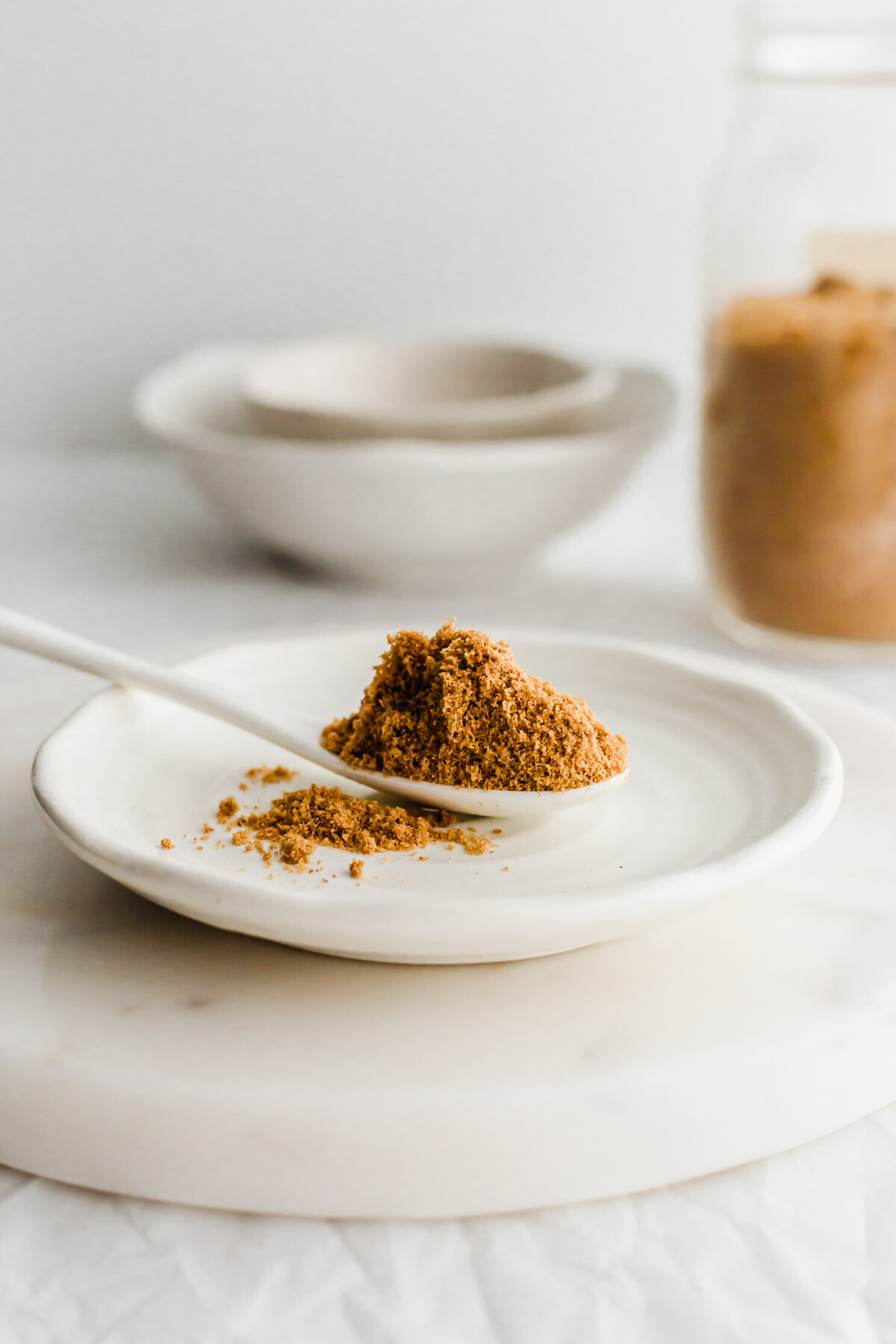
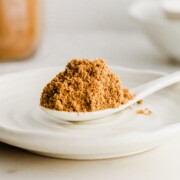
Chinese Flounder Powder (鲽鱼粉) is made from dried, roasted flat fish and adds a concentrated dose of seafood flavor to many dishes, including Wonton Noodle Soup.
Want to save this recipe?
Enter your email & I'll send it to your inbox. Plus, get great new recipes from me every week!
What is Chinese flounder powder (鲽鱼粉)?
Chinese Flat Fish Powder (sometimes called flounder powder, dried sole powder or 比目鱼粉) is a traditional Chinese ingredient known for its savory, natural umami boost.
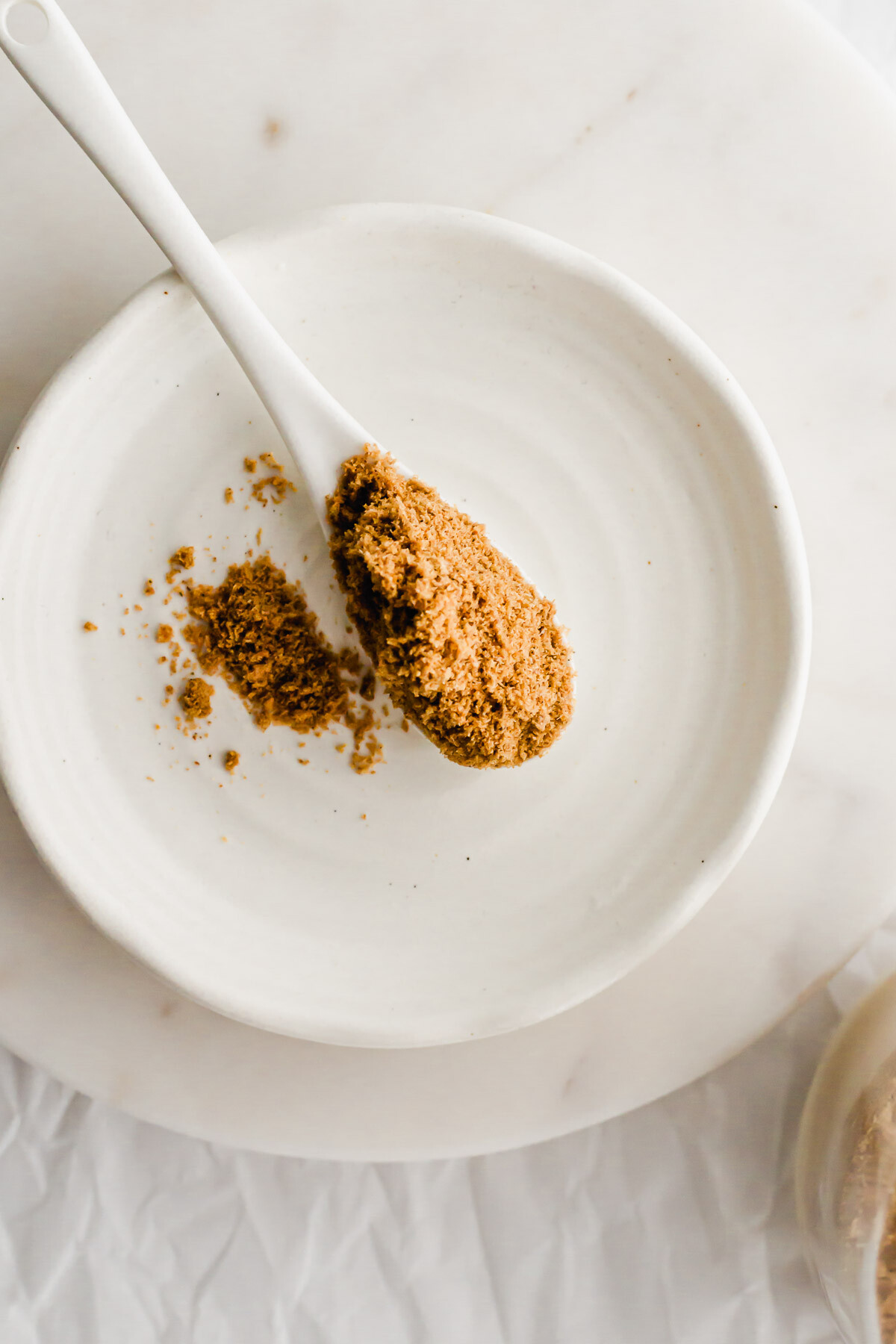
This fine, savory powder is made from dried, roasted flounder/flat fish and adds a concentrated dose of seafood flavor and subtle sweetness, especially in congee and soups.
If you've ever enjoyed a bowl of deeply flavorful Cantonese wonton noodle soup or noticed a certain umami flavor in Hong Kong-style broths, chances are the secret ingredient is Chinese flounder powder (鰈魚粉 / 鳎目鱼粉).
How is the fish powder made?
While you can sometimes buy Chinese flat fish powder premade at Asian supermarkets, making it from scratch gives you full control over freshness, quality, and purity -- without any additives or preservatives.
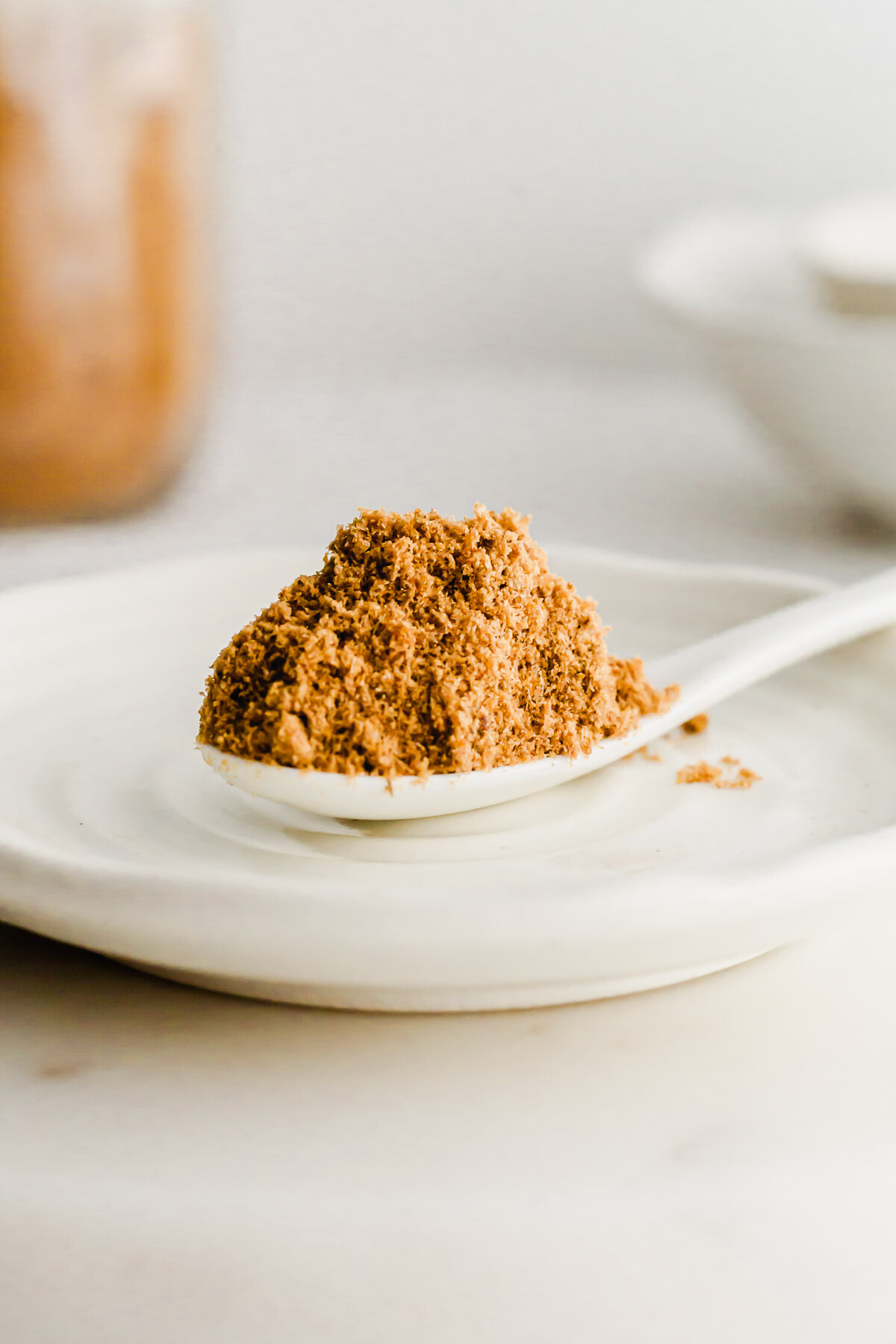
Chinese flounder powder is made by drying and roasting flounder (or sole), then grinding it into a very fine powder.
It has a savory, fish-forward umami flavor (not overly fishy when used properly), with a natural sweetness that enhances broths and a light, toasty aroma from the roasting process.
It's similar to Japanese dashi powder or anchovy powder in terms of function, but its flavor profile is gentler and more rounded.
Why you'll love this recipe
Making your own Chinese Flat Fish Powder at home is easy, economical, and a great way to keep your pantry stocked with an all-natural flavor booster.
Umami-rich: adds a deep, natural flavor to simple dishes, such as congee and soup.
Clean ingredients: just fish, nothing else -- no need for MSG or bouillon cubes.
Versatile: sprinkle into congee, wonton soup, noodles, or even steamed eggs.
Ingredients you'll need
- 2-3 dried Chinese flat fish (flounder): usually available in Asian grocery stores (look for 比目鱼干, flat, sun-dried fish)
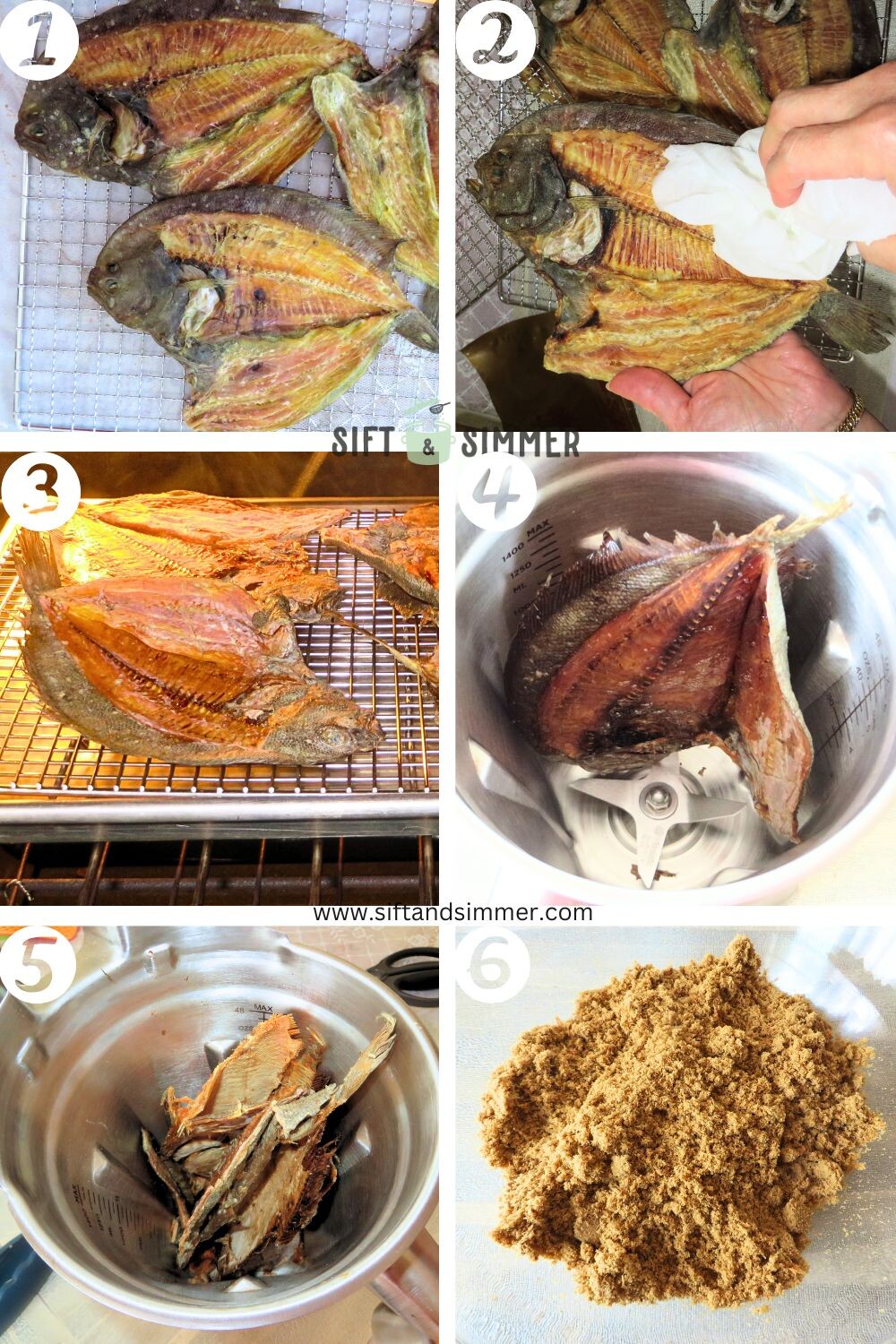
How to make Chinese flounder powder at home
Clean the dried flounder with some damp paper towel (or flash wash and dry immediately with
paper towel).
Place the fish into a dehydrator at 104ºF for 4~6 hours until very dry.
Toast the fish under the broiler (2nd top rack) in the oven for about 10 minutes (5 minutes on each side) until toasted, crispy and bubbling with oil on the surface.
Let the toasted fish cool down.
Cut the fish into smaller pieces and place into a high-powered blender, spice grinder or food processor.
Grind and pulse into a very fine powder. You may need to stop and shake the jar or scrape down the sides.
Pass the powder through with a fine sift and re-grind the larger pieces.
Store the fine fish powder in an airtight glass jar in the fridge, or freeze for longer shelf life.
How to use flounder powder
In broths & noodle soups
Most famously used in Cantonese wonton noodle soup, just a small amount enhances the broth with rich seafood flavor without the need for long simmering or extra dried seafood.
Tip: Add about ½-1 teaspoon to your broth per 4 cups of liquid. Adjust to your taste.
In dumpling fillings, seafood & vegetables
A pinch of flounder powder can boost the savory notes in pork or shrimp dumpling filling, acting almost like a natural MSG.
Try it over steamed eggs, curry fish balls, or blanched vegetables.
In sauces or seasonings
Mix into XO sauce, chili oil, sprinkle into fried rice, or use it in dry rubs for grilled seafood or tofu to amp up that umami flavor.
How to store
Keep the dried sole powder in a cool, dark place in an airtight container.
Since it's a dried seafood product, it's best used within 6 months for optimal flavor.
You can also store it in the fridge or freezer to extend shelf life.
Expert tips
Ensure the fish is crisp and fully dry before grinding to prevent any clumping.
Store fish powder in a moisture-proof container to keep it fresh.
Add silica packets to prolong the shelf-life. (But make sure not to ingest!)
Other delicious recipes you may like


Did you make this recipe?
Let me know if you try out this recipe -- I love seeing your creations! Tag me on Instagram @siftandsimmer and be sure to leave me a comment/rating below!
How to Make Chinese Flounder Powder (鲽鱼粉)
Equipment
- dehydrator
For accuracy and precision in baking recipes, use weight (metric) measurements when available.
Ingredients
- 2-3 dried Chinese flat fish/flounder look for flat, sun-dried fish
Instructions
Prepare the fish:
- Clean the dried flounder with some damp paper towel (or flash wash and dry immediately with paper towel).
Dehydrate:
- Place the fish into a dehydrator at 104ºF/40°C for 4~6 hours until very dry.
- Toast the fish under the broiler (2nd top rack) in the oven for about 10 minutes (5 minutes on each side) until toasted, crispy and bubbling with oil on the surface.
- Let the toasted fish cool down.
Grind:
- Cut the fish into smaller pieces and place into a high-powered blender, spice grinder or food processor.
- Grind and pulse into a very fine powder. You may need to stop and shake the jar or scrape down the sides.
- Pass the powder through with a fine sift and re-grind the larger pieces.
Store:
- Store the fine fish powder in an airtight glass jar in the fridge, or freeze for longer shelf life.
Nutrition
The nutritional information provided should be considered as approximate and is not guaranteed. Please use your best judgment to ensure food is safely prepared and/or a good fit for your diet.


Heidi
This is such a creative way to add some amazing flavors to dinner. I especially appreciate that it won't contain MSG... or require bouillon cubes which also often contain MSG. Thank you for this amazing recipe!
Michelle
Thank you Heidi! Happy to help! 🙂
Healthy World Cuisine
A trip to Sheung wan market area is just what we need! So much concentrated flavor and making your own Chinese flounder powder - you know exactly what is in it. Perfect topping for congee!
Michelle
Yes! It would be delicious on a bowl of piping hot pork congee...mmm! Thanks Bobbi! 🙂